

(Including Professional Agile Leadership – Scrum.org and personal experience)
Scrum and the Role of Management
According to the Scrum Guide, a Scrum Team consists of three accountabilities: Product Owner, Scrum Master, and Developers. There is no traditional management role within the Scrum Team itself. Instead of directing or controlling the work, management operates outside the Scrum Team, focusing on creating the conditions that enable teams to succeed.
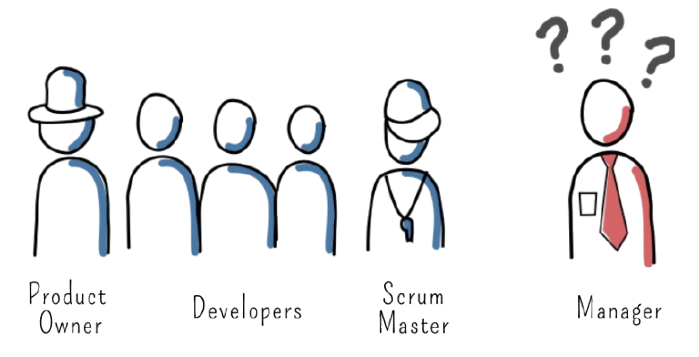
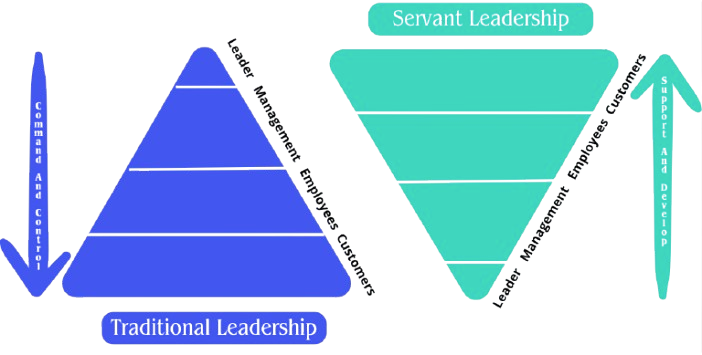
This shift requires a different mindset: from command-and-control to servant and agile leadership.
Management Responsibilities in a Scrum Environment
1. Creating an Enabling Environment
Management is responsible for building an organizational environment that supports Scrum Teams. This includes:
- Removing organizational and systemic impediments
- Providing the necessary resources, tools, and skills
- Encouraging transparency, learning, and continuous improvement
Rather than managing tasks, leaders manage the system in which teams operate.
2. Supporting Self-Managing Teams
Scrum Teams are self-managing, meaning they decide how to accomplish their work. Management supports this by:
- Trusting teams to make decisions
- Avoiding micromanagement
- Empowering teams to take ownership of outcomes
Effective leadership focuses on enabling autonomy while maintaining alignment with organizational goals.
3. Leading Cultural Change
One of management’s most critical roles is driving cultural and behavioral change. Agile leadership requires:
- Modeling Scrum values such as openness, respect, and courage
- Promoting feedback and empiricism
- Shifting decision-making closer to the teams
Without leadership support, Agile transformations often fail to deliver lasting results.
4. Connecting Strategy to Value
Management ensures that organizational strategy is clearly communicated and aligned with value delivery. Leaders:
- Define vision and strategic goals
- Support Product Owners in maximizing value
- Engage stakeholders without disrupting team autonomy
This approach aligns closely with the Professional Agile Leadership (PAL) principles from Scrum.org.
Professional Agile Leadership (PAL) Perspective
The Professional Agile Leadership (PAL I) certification by Scrum.org emphasizes that agility depends largely on leadership behavior and organizational design. Agile leaders understand Scrum, embrace empiricism, and actively support self-management and continuous improvement.
In 2023, I obtained the Professional Agile Leadership (PAL I) certification. This experience provided me with valuable insights into how management can effectively support Scrum Teams. It significantly improved my understanding of how to work with management, how leadership behavior impacts team performance, and how managers can enable agility by focusing on value, trust, and organizational learning rather than control.
Traditional Management vs. Agile Leadership in Scrum
| Traditional Management | Agile Leadership |
|---|---|
| Directs and controls work | Enables and supports teams |
| Assigns tasks | Encourages team ownership |
| Focuses on output | Focuses on outcomes and value |
| Centralized decision-making | Decentralized, team-based decisions |
| Predictability through control | Adaptability through empiricism |
| Traditional leaders speak more | Servant leaders listen more |
Conclusion
Management plays a crucial role in Scrum, not by managing the work itself, but by shaping the environment in which Scrum Teams operate. Through the principles of Professional Agile Leadership, managers can foster self-management, support cultural change, and align strategy with value delivery.
My experience with the PAL certification in 2023 reinforced the importance of leadership behavior in Agile success and provided practical insights into collaborating effectively with management in a Scrum-based organization.