

Sprint Retrospective
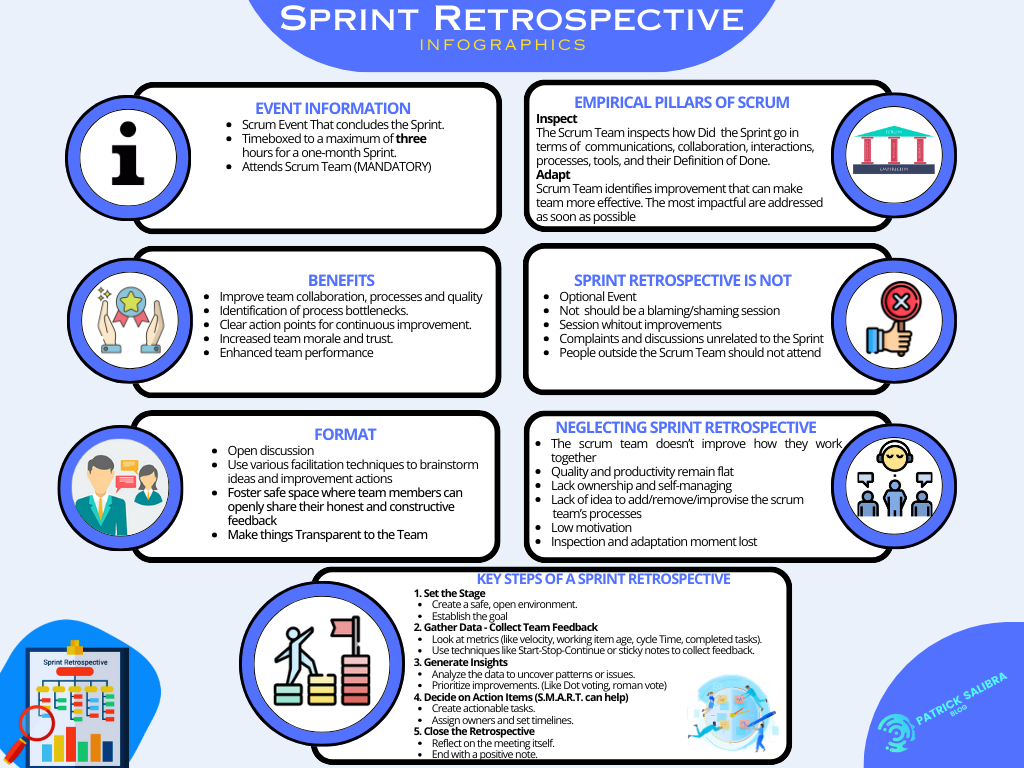
In this post, we’ll explore why sprint retrospectives are crucial, highlight the key elements of an effective retrospective, and showcase how this infographic can serve as your team’s guide.
Why Are Sprint Retrospectives Important?
Retrospectives are more than just meetings—they are a cornerstone of continuous improvement. By dedicating time to reflect on what went well, what didn’t, and how the team can improve, retrospectives ensure the team evolves with every sprint. Benefits include:
- Enhanced Communication: Encourages open dialogue and builds trust among team members.
- Improved Processes: Identifies bottlenecks and inefficiencies to refine workflows.
- Team Alignment: Reinforces shared goals and promotes collective ownership.
- Fostering Innovation: Creates a safe space to experiment and implement new ideas.
Anatomy of an Effective Sprint Retrospective
To maximize the impact of a retrospective, it’s important to structure the session effectively. Here are the key stages:
- Set the Stage: Start by creating a positive and inclusive environment. Use an icebreaker or review the sprint’s goals to get everyone aligned.
- Gather Data: Collect insights from the team. Common methods include sticky notes, online boards, or tools like Start-Stop-Continue.
- Generate Insights: Analyze the data to uncover patterns or underlying issues. Facilitate discussions that lead to a shared understanding.
- Decide What to Do: Prioritize actionable items. Assign clear owners and deadlines to ensure follow-through.
- Close the Retrospective: End on a high note. Recap decisions and express appreciation for everyone’s input.
Introducing the Sprint Retrospective Infographic
To make these steps actionable and engaging, I’ve created an infographic that visually outlines each stage of the sprint retrospective process. Here’s how it can help your team:
- Clarity: A clear and concise layout simplifies complex steps.
- Engagement: Visual elements keep the team focused and invested.
- Consistency: Use it as a template to maintain a steady rhythm across sprints.
The infographic breaks down the process into manageable steps, highlights tips for facilitation, and includes a space to jot down key takeaways and action items.
Tips for Running Effective Retrospectives
Even with a great framework, the success of a retrospective depends on how it’s facilitated. Here are some quick tips:
- Be Inclusive: Ensure everyone’s voice is heard, especially quieter team members.
- Stay Positive: Focus on learning and improvement rather than assigning blame.
- Timebox Discussions: Keep the meeting productive by setting clear time limits.
- Follow Through: Revisit action items in the next sprint to maintain accountability.
Conclusion
Sprint retrospectives are an investment in your team’s growth. With the right approach and tools—like this infographic—you can transform your retrospectives from routine meetings into powerful opportunities for improvement.
Over the years I have also created a collection of sprint retrospective forms that I want to share with you. I have made it in the form of a tear-off calendar with a new one for each week. Special days such as new year’s eve, easter etc etc are included in that. See this link : 2025 TEAR OFF – Retrospectives.
[Download the Sprint Retrospective Infographic Here!]