

Sprint Planning
Sprint planning is the cornerstone of any Agile development process. It’s where ideas transform into actionable plans, ensuring the team stays aligned and focused throughout the sprint. Whether you’re new to Agile or looking to refine your practices, this guide will walk you through the essentials of sprint planning.
What is Sprint Planning?
Sprint planning is a collaborative meeting held at the beginning of each sprint. The primary goal is to define the work to be completed and how the team will achieve it. The result is a sprint backlog—a list of prioritized tasks or user stories that guide the team for the next iteration.
Key Objectives of Sprint Planning
- Set a Clear Sprint Goal
Establish a specific, measurable, and achievable objective that the team will deliver by the end of the sprint. - Break Down User Stories
Divide larger epics into manageable tasks, ensuring clarity and feasibility. - Estimate Workload
Use tools like story points or t-shirt sizing to estimate effort and ensure the sprint is realistic. - Team Alignment
Foster collaboration by involving all team members to discuss potential challenges and solutions.
The Sprint Planning Process
1. Prepare in Advance
- Review the Product Backlog: Ensure it’s prioritized and updated by the Product Owner.
- Assess Team Capacity: Account for team members’ availability, including planned leaves or other commitments.
- Refine User Stories: Clarify requirements and acceptance criteria.
2. Conduct the Planning Meeting
- Step 1: Define the Sprint Goal
Discuss what the sprint aims to achieve in terms of business value. - Step 2: Select Backlog Items
The team collaborates to pull items into the sprint backlog, starting with the highest priorities. - Step 3: Break Down Tasks
Create subtasks for each user story to ensure clarity. - Step 4: Estimate Effort
Agree on realistic estimations and commitments.
3. Finalize and Commit
The team collectively agrees on the sprint backlog, ensuring they can confidently meet the objectives.
Best Practices for Effective Sprint Planning
- Timebox the Meeting: Keep it within 2-4 hours, depending on the sprint length.
- Leverage Tools: Use Agile tools like Jira, Trello, or Asana to organize and track progress.
- Foster Open Communication: Encourage team members to share concerns or insights.
- Keep the Sprint Realistic: Avoid overloading the backlog—focus on delivering quality over quantity.
Check out the infographic :
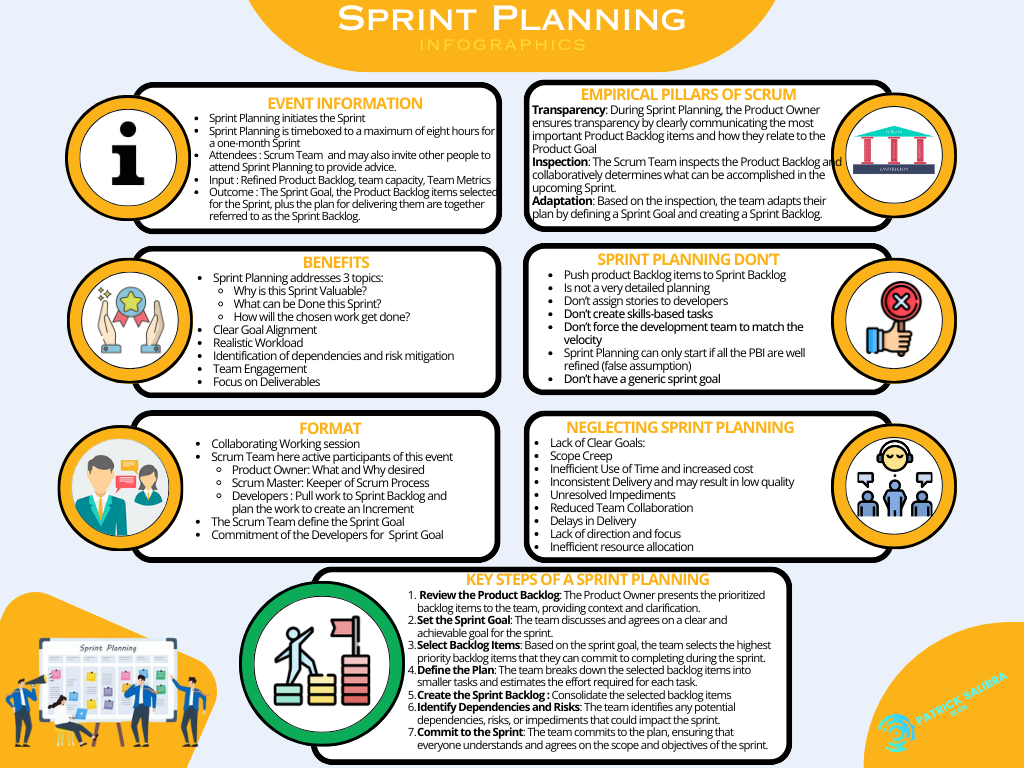
[Download the Sprint Planning Infographic Here!]