

I’ve been working in and around Agile-at-scale environments for quite some time now. And there’s one pattern I keep seeing over and over again: the role of the Release Train Engineer (RTE) is often misunderstood, or seriously underestimated.
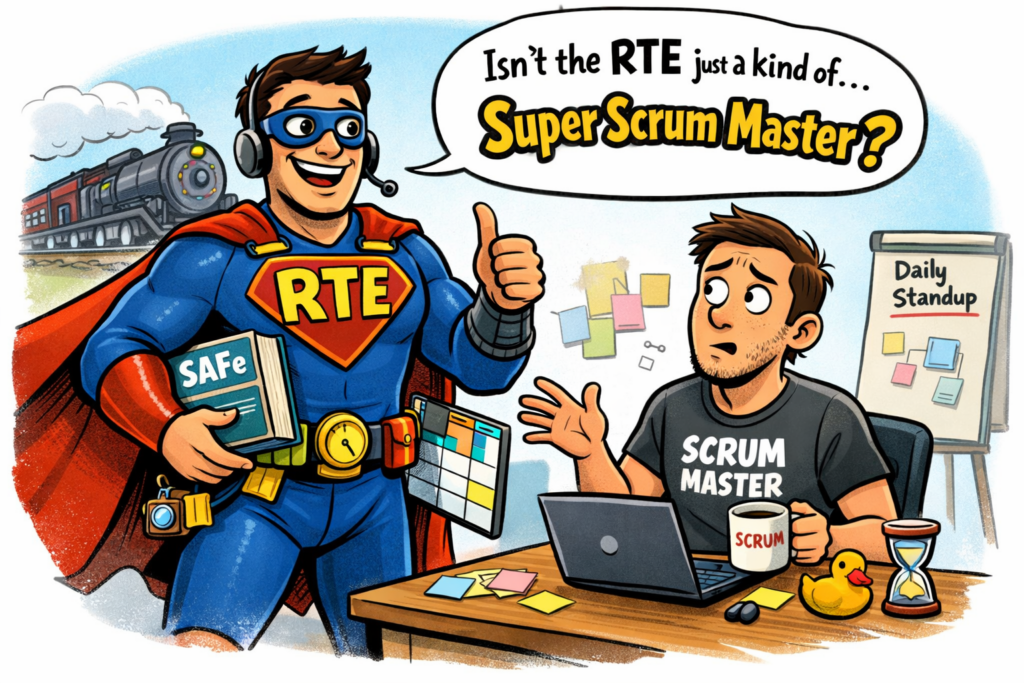
I regularly hear things like:
“Isn’t the RTE just a kind of super Scrum Master?”
And honestly, that question alone already explains many of the problems I see in practice.
Agile at scale is not just “more teams”
Working Agile with one or two teams is relatively straightforward. But once multiple teams need to deliver value together, everything changes. Dependencies increase, priorities collide, architectural decisions matter more, and business pressure becomes more visible.
In SAFe, this collaboration takes shape in an Agile Release Train (ART): a long-lived team of teams aligned around a value stream. And a train like that doesn’t move forward by accident.
That’s where the RTE comes in.
What a good RTE actually does
In my experience, a strong RTE is someone who sees the system, not just the teams. They focus less on individual velocity and more on how value flows across the ART.
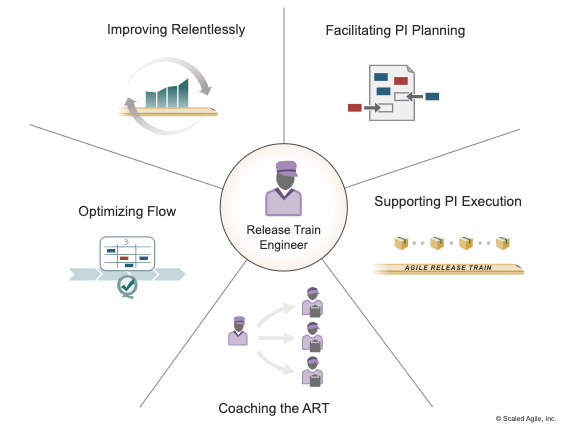
An RTE typically acts as:
- facilitator of PI Planning, System Demos, and Inspect & Adapt
- coach for Scrum Masters, Product Management, and leaders
- someone who makes systemic impediments visible
- a guardian of flow and predictability
But what you won’t find in most role descriptions is perhaps the most important part:
👉 the RTE keeps the honest conversation alive.
Flow over being busy
One of the biggest traps I see organizations fall into is confusing “being busy” with “being effective.” Calendars are full, teams are overloaded, yet value moves slowly.
A good RTE asks uncomfortable but necessary questions:
- Where is work actually getting stuck?
- What are we trying to do in parallel that we shouldn’t?
- Which dependencies are slowing us down structurally?
These questions aren’t always welcome — especially at leadership level — but without them, Agile quickly turns into a set of rituals rather than a way of working.
PI Planning is not a performance
PI Planning is always a revealing moment for me. It shows very clearly how mature an ART really is. Is it a polished performance where everyone nods along? Or is it a space where real trade-offs and tough conversations happen?
The RTE plays a crucial role here. Not by forcing alignment, but by creating the conditions for meaningful alignment. Tension isn’t something to avoid; it’s often a signal that something important is being discussed.
A successful PI Planning doesn’t end with a perfect plan, but with:
- clear goals
- transparency about risks and dependencies
- shared ownership across teams
Leadership without authority
What I personally find most challenging — and most rewarding — about the RTE role is that it’s largely about influence without formal authority.
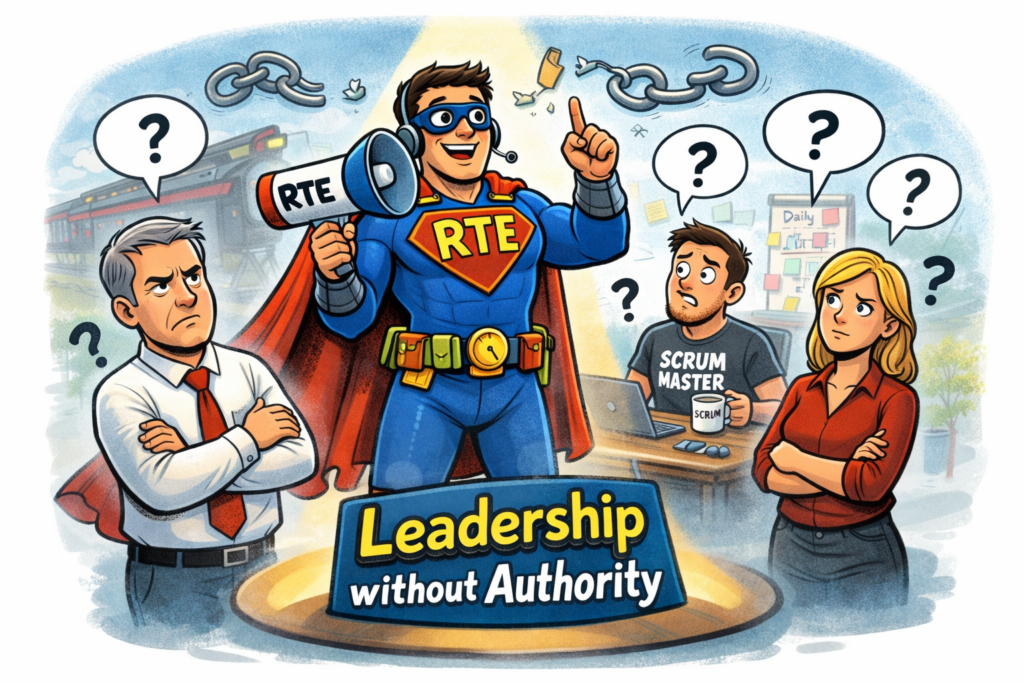
A strong RTE:
- surfaces problems without blaming individuals
- challenges leaders on system behavior, not intentions
- protects teams from unrealistic pressure
- continuously encourages learning and improvement
That requires trust, consistency, and the courage to say what needs to be said — even when it’s uncomfortable.
Why the RTE makes the difference
I’ve seen organizations where SAFe was “implemented,” but never really lived. And I’ve seen ARTs where Agile genuinely worked at scale. The difference was rarely tooling or processes.
Almost always, it came down to people.
And very often, to the RTE.
Not as a coordinator or planner, but as a catalyst for flow, transparency, and trust.
Final thoughts
Agile at scale is complex. We shouldn’t pretend otherwise. But that’s exactly why the role of the Release Train Engineer matters so much.
Not to push the train harder.
But to make sure it keeps moving in the right direction.